Neo-Academic coverage of the Journal of General Psychology special issue on the psychology of video games:
- Is Video Game Research Influenced by the Media?
- Does Personality Predict Vulnerability to Violence in Games?
- Can Spatial Cognition Be Trained with Video Games?
- How Do We Design Effective Video Games for Learning?
- Can Video Games Be Used in Health Care?
- Should Children with Autism Play Video Games?
- Should Video Games Be Used in Therapy?
- Can Video Games Get People to Vote?
- How Do Video Games Motivate People?
- How Do Typical Gamers Play Games?
 There are few topics so hotly debated on the Internet as the value of video games. Are they the next generation’s artistic advance, as film was for the last, or are they a blight that makes children overly aggressive and dangerous? In this 10-part series, I’m reviewing a recent special issue of the Journal of General Psychology on video games. For more background information, see the first post in the series.
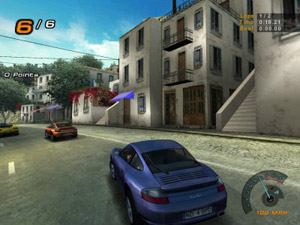
Need for Speed 2, proven medical tool
In the fifth article in this issue, Kato (2010)1 discusses the potential uses of video games in health care. There are two broad perspectives discussed: 1) the use of video games for improving patient care (training medical personnel, especially for surgical training) and 2) the use of video games for improving patient compliance (training patients).
After lamenting the brevity of the video games literature in comparison to the patient care literature, Kato reveals the primary advantages to patient care are 1) patients playing video games to learn about their conditions/treatment is usually voluntary, 2) they are intrinsically motivating (I read this to mean “they are more fun than sorting through 50 pages of text”), 3) they often involve active play, and 4) it is unique in patient care in that it involves some degree of fantasy (though Kato uses the somewhat disparaging term, “make-believe quality.”) Kato also makes a totally unnecessary invocation of Freud to help explain this.
Kato also gives an interesting perspective on games in general, which I find myself agreeing with:
If we thought about video games as play for adults, we could create a research program that examined the relationship between
video game play and social skills such as perspective taking and empathy; psychosocial functioning such as self-confidence, happiness, relaxation, and achievement motivation; and cognitive skills such as attention, planning, spatial reasoning, and creativity. Researchers who develop and evaluate the impact of serious games should acknowledge theories of play as a pathway to learning, not just among children, but among adults as well.
This is certainly one of the biggest weaknesses in the current (small) research literature in psychology. Much gaming research de-emphasizes play (i.e. fun), which takes away much of its value – entertainment as a way to increase motivation to learn. Edutainment lacking play is not edutainment – it’s just education, and should be treated as such.
Kato continues by describing several interesting applications of video games in health care studied already. Note that I use the word “developed” to indicate that the study was developed by researchers (in contrast to commercially available games):
- Video games have a positive effect on side effects associated with cancer treatment, including nausea, vomiting, anxiety, and pain associated with chemo (which started with research on the Atari 800 XL!).
- Video games decreased anxiety of children about to receive general anesthesia – as effectively as medication.
- Video games can be used in physical therapy to restore hand-eye coordination and muscle control (and are much more interesting than traditional physical therapy). One study even used wheelchair maneuvers to race in Need for Speed II and Power Boat Racer!
- A video game called SnowWorld was developed and used successfully to reduce self-reported pain in people with chronic pain from burns.
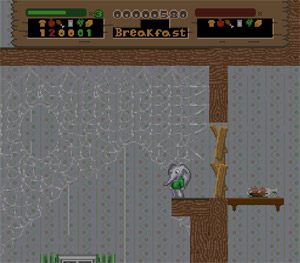
Busy collecting diabetes-appropriate foods in Packy and Marlon for the SNES
A video game called Packy and Marlon was developed and used successfully to teach children how to manage their insulin levels.
- Video games called Brokie the Brontosaurus and SpiroGame were developed and used successfully to teach children about asthma and control their breathing.
- Several video games have been developed to better help children deal with voiding dysfunction (urinating or defecating when not otherwise desired, often triggered by irritable bowel syndrome).
- A video game called Re-Mission was developed and used successfully to increase cancer treatment compliance in adolescents (taking their proscribed medications correctly).
- A number of studies have linked surgical skill with video game use, and though most of this research is correlational, there is one 5-week controlled experiment that showed playing Half-Life improved surgical skill on a simulator.
- A video game called the Oncology Game was developed and used successfully to increase oncology patient management knowledge in medical students.
- A video game of a board game was developed and used successfully to increase breast problem management skills in medical students.

Determining patients most in need of care mid-catastrophe in Burn Center
Video game called Burn Center and Pulse!! were developed to simulate “mass casualty disaster scenario[s]” and the National Naval Medical Center.
So overall – I was pleasantly surprised to find quite a lot of research here! And I was especially pleased to find that a fair amount was used for training adults (medical students and surgeons). Apparently video game research is alive and well, at least in this domain. The medical domain is much more skill-based than most others, so this makes sense to me. If anyone could use video games for good, it would be medicine. And after this read, I’m certainly excited to see what’s next!
- Kato, P. (2010). Video games in health care: Closing the gap. Review of General Psychology, 14 (2), 113-121 DOI: 10.1037/a0019441 [↩]
Neo-Academic coverage of the Journal of General Psychology special issue on the psychology of video games:
- Is Video Game Research Influenced by the Media?
- Does Personality Predict Vulnerability to Violence in Games?
- Can Spatial Cognition Be Trained with Video Games?
- How Do We Design Effective Video Games for Learning?
- Can Video Games Be Used in Health Care?
- Should Children with Autism Play Video Games?
- Should Video Games Be Used in Therapy?
- Can Video Games Get People to Vote?
- How Do Video Games Motivate People?
- How Do Typical Gamers Play Games?
There are few topics so hotly debated on the Internet as the value of video games. Are they the next generation’s artistic advance, as film was for the last, or are they a blight that makes children overly aggressive and dangerous? In this 10-part series, I’m reviewing a recent special issue of the Journal of General Psychology on video games. For more background information, see the first post in the series.
Finally, something closer to my own research area. The fourth article in the series is Leonard Annetta’s “The “I’s” Have It: A Framework for Serious Educational Game Design.”1
There are several interesting points here. The first I came across was mention of a video game authoring program for teaching being developed at North Carolina State University. I’ll let Annetta tell you about it:
students and scholars are working to create a video game authoring platform where teachers and students can create their own games that align with content standards in science, mathematics, and technology education, although the platform is usable in many other domains. This is not a new idea but rather a recycling of many proven educational theories and practices into the video game world.
I hunted around for some material on NCSU’s website and could not find much more information than that, although I assume it is related to their Digital Games Research Center. That’s too bad; this sounds quite promising (and is similar to a research area my wife is working on!).
Annetta begins by introducing several terms that I myself have struggled at times to distinguish: serious games, serious educational games, simulations, and virtual worlds. To Annetta, serious games include all games that are designed to train someone in a particular skill set. To me, this is a very limited definition – what about games designed to change attitudes or provide perspective? He continues by defining serious educational games as serious games in a K-20 context – an unnecessary distinction, I think. A simulation is defined as a serious game without either 1) score-keeping or 2) the use of virtual or real currency to trade in-game items. I suppose a serious game examining stock market trading would not be a simulation, while Minecraft would be a simulation. Finally, virtual worlds are large, open-ended environments designed for social interaction (although I generally think of these as MUVEs). In this article, Annetta focuses on serious educational games alone, although I see no reason that the other categories would not apply as well.
Within this context, a 6-I model is introduced as a way to consider game design, with each progressive I a larger category containing the previous I:
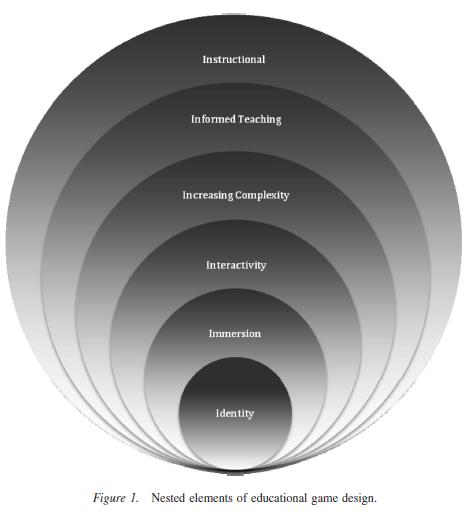
Annetta's 6 I's of Educational Game Design
- Identity. This is the narrowest category, focused on establishing individualism in virtual environments. A study is cited in which students could not pick very different avatars from their classmates, and thus never were able to establish a unique virtual identity for themselves, which in turn led to negative engagement and immersion outcomes for the students. Which brings us to…
- Immersion. Most of the value from serious gaming, according to Annetta, comes from their “ability to capture the player’s mind and trick him/her into believing he or she is a unique individual in the environment.” Doing this (i.e., establishing identity) creates a sense of immersion, or presence, in the virtual environment. A poor sense of immersion means that a student is never fully engaged (although no empirical evidence of this seems to be presented).
- Interactivity. A very interesting study is briefly discussed under this heading – apparently, people experience the same sorts of social inhibitions in the presence of nonplayer characters (NPCs; game characters controlled by the computer) as they do in the presence of player characters (PCs; game characters controlled by real people). I’m not sure if the players were aware when the other characters were PCs or NPCs, but it is certainly a provocative finding. It is, unfortunately, the only empirical finding really discussed that directly applies to this “I”.
- Increased Complexity. I’m not sure what to think of this quote: “There is a balancing act when designing complex SEGs. This is not unlike designing a complex science activity. It involves juggling multiple objectives, choosing what to prioritize and when, what to defer, and what conceptual levels to tap.” That’s true of all instruction, isn’t it? What is unique about serious educational gaming?
- Informed Teaching. This section discusses the difficulties in collecting accurate research data on what students are doing when playing educational games. I’m not quite sure what that has to do with “informed teaching,” but it presents a feature as a disadvantage that I consider an advantage: there can be a vast amount of collected data from studies of educational gaming. One of the advantages to all interaction taking place on a computer is that you can collect a record of literally everything the player does. I suppose this is a disadvantage if the only kind of data analysis you’re familiar with is ANOVA, but the types of data modeling that could be used here make this a very promising area indeed.
- Instructional. This I pushes that all of the previous Is are necessary to make quality educational games, which I’m not sure merits its own category. More interestingly, the concept of adaptable video games is discussed, and I agree that there is real possibility here: “Content that comes easily for the most gifted students causes those students to get bored as they wait for the teacher to work with their peers who did not assimilate the content as easily. Conversely, students who grapple with difficult concepts or content are often left behind if the teacher decides to challenge the students who understood the material with ease. An SEG with artificial intelligence could challenge the students who ‘get it’ and scaffold learning for those who do not.” This, I think, is the most promising area of both video games and web-based training (i.e. my) research – educational systems than can adapt themselves to the needs of the learner could dramatically alter the instructional landscape. Imagine a classroom where every student learned as their own pace – quick but not too quick – and everyone received the individualized attention they needed to excel. A bright future indeed.
So overall, is this model a good framework for educational game design? Sort of. The principles listed here are certainly interesting, and it may provide a starting point for research in this domain. These are certainly provocative issues to consider. But the use of a multi-layered circles-within-circles model? Probably not justified.
Perhaps more critically, no attention is paid to the value of this framework over previous or alternative frameworks for general instructional design. Is it really all that different to design educational games than it is to design in-person games? Does only the technology differ, or is there really something fundamentally different about these computer-based environments? I am not convinced that this current view offers anything incrementally valuable over generally accepted models of instruction, and this article provides little to try to convince otherwise.
- Annetta, L. (2010). The “I’s” have it: A framework for serious educational game design. Review of General Psychology, 14 (2), 105-112 DOI: 10.1037/a0018985 [↩]
Neo-Academic coverage of the Journal of General Psychology special issue on the psychology of video games:
- Is Video Game Research Influenced by the Media?
- Does Personality Predict Vulnerability to Violence in Games?
- Can Spatial Cognition Be Trained with Video Games?
- How Do We Design Effective Video Games for Learning?
- Can Video Games Be Used in Health Care?
- Should Children with Autism Play Video Games?
- Should Video Games Be Used in Therapy?
- Can Video Games Get People to Vote?
- How Do Video Games Motivate People?
- How Do Typical Gamers Play Games?
There are few topics so hotly debated on the Internet as the value of video games. Are they the next generation’s artistic advance, as film was for the last, or are they a blight that makes children overly aggressive and dangerous? In this 10-part series, I’m reviewing a recent special issue of the Journal of General Psychology on video games. For more background information, see the first post in the series.
In contrast to the previous piece in this issue, Spice and Feng (2010)1 analyze the potential of video games to improve visuospatial cognition – the use of visual information to inform our understanding and interaction with 3D environments. For example, if you were to get a lot of practice navigating virtual 3D environments (such as World of Warcraft), would that improve your ability to navigate real 3D environments (e.g. hiking through a forest)?
Spice and Feng break down all video games research in this area into three categories: action games, driving games, and mazes/puzzles. This is not because other kinds of games don’t have potential for positively affecting visuospatial cognition – it’s because no one really studies other types of games in this context (which is a shame). Of the three types commonly studied, action games are identified as having the most potential in this area.
After discussing a brief history of action-oriented first-person shooter games (back to 1971’s Computer Space, which was released a year before Pong), the authors discuss the methodological and statistics concerns common in this domain. We’re generally more interested in the effect of video game playing for years on general skill levels than the effect of a 1-hour training program on a post-test measure.
This reflects the major problem that I face in my own research on training. We’re interested in long-term effects, but the laboratory environments makes long-term effects difficult to capture. We’re interested in rigorous experimental design, but field studies are notoriously difficult to control. So what’s the best option?
It’s actually pretty straightforward – we can’t make reasonable conclusion from either type alone. Both perspectives (quasi-experimental/long-term observational studies and randomized control studies) are needed to inform conclusions in this (and many) domains.
Back to the article: since the initial observational and experimental studies on the general effects of video games, the focus has shifted somewhat to more specific processes in an effort to test spatial cognition theory. This focus is, in the words of the article, “how video games modify the fundamental sensory and perceptual processes that support spatial cognition.”
Since that’s the most interesting part of this article, I provide here a summary of the major studies discussed. They also provide a fair amount of theoretical support for each of these areas, but I am most interested in the empirical studies discussed. If you’re interested in this domain, and especially if you’re interested in the theoretical rationale for these, I strongly suggest you check out the original article.
- Sensory Processes: Contrast sensitivity (your ability to distinguish distinctions between similar colors/shapes/etc) improves after training with an action game.
- Attentional Processes: Playing first-person shooters can expand the attentional visual field, which is the ability to incorporate information from across your entire visual field (where you are look, plus the periphery) when making decisions. For example, with a larger attentional visual field, you are more likely to see that car driving erratically down the cross-street and change your driving to account for it.
- Visuomotor Coordination/Speed: Yes, first-person shooters improve hand-eye coordination. Surprise!
Some first-person shooters require the management of many pieces of information: strategic planning, threat assessment, prioritization of targets. The authors also thus discussed memory as a potentially benefit to playing video games, but no studies were located examining it.
Overall, the authors offer many reasonable visuospatial cognition processes that could be improved as a result of playing video games, and discuss the research evidence for each. Although there were not nearly as many studies as I would like to have seen (many areas were as low as 1 or 2), there is definitely precedent to consider video games to have beneficial effects in this domain.
That opens the door to some more practical outcomes: the potential of video games to improve psychomotor skills relevant to work.
- Spence, I., & Feng, J. (2010). Video games and spatial cognition. Review of General Psychology, 14 (2), 92-104 DOI: 10.1037/a0019491 [↩]